This is fab!


What can I say except: Thank you! I’m delighted and surprised and extremely gratified that Heat 2 has been named one of Barnes & Noble’s Best Books of 2022.

This is fab!
What can I say except: Thank you! I’m delighted and surprised and extremely gratified that Heat 2 has been named one of Barnes & Noble’s Best Books of 2022.
I’m really excited to have a short story in this charity anthology, The Stars Will Shine Again, raising money for #HelpForHeroes. Released in digital and paperback formats on 10 December 2021 and available to pre-order next week.

I’m over the moon to be sharing the cover for The Stars Will Shine Again. This is the second anthology I’ve complied to raise money for Help for Heroes and it’s an honour to be working for this wonderful charity again.
The first book, When Stars Will Shine, is on offer now, so pop over to Amazon and get your copy!
But now, here it is! Book two…
How stunning is this?
Designed by Amanda Horan of Let’s Get Booked…
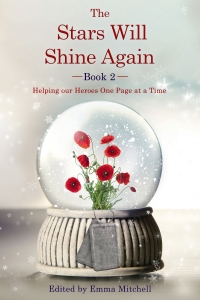
The Stars Will Shine Again is a collection of short stories from your favourite authors who have come together to deliver you a Christmas read with a twist. With true war tales that will break your heart, gritty crimes that will shake you to your core, magic and mystery, and heart-warming tales of love lost and found, this anthology has something for everyone. And, with every penny…
View original post 461 more words

Steven Burns, a former major league baseball player, had the perfect life… until his five year old daughter is abducted and murdered.
With zero suspects the police are left baffled and Steven must accept the haunting loss without justice.
Until…
A shadowy stranger offers Steven an opportunity to exact ultimate revenge. Compelled by fury and grief, Steven finds the stranger’s unspeakable proposition impossible to resist, despite fears he’s headed down a path of no return.
The blurb for this novel is very enticing, and I’m pleased to say the story lives up to the blurb. Steven Burns has the chance to come face to face with his child’s abductor, but why? And how? This is a tense ride with thrills and spills, and enough surprises to keep you reading (or in my case, listening). I always enjoy a book where I cannot even begin to guess how things are going to play out, and this hit the mark for me.
I believe Dwayne Alexander Smith is a professional screenwriter, and if so, that makes a lot of sense. The story is very well-crafted and keeps you glued to your seat, and the narration by Tom Jordan is excellent.
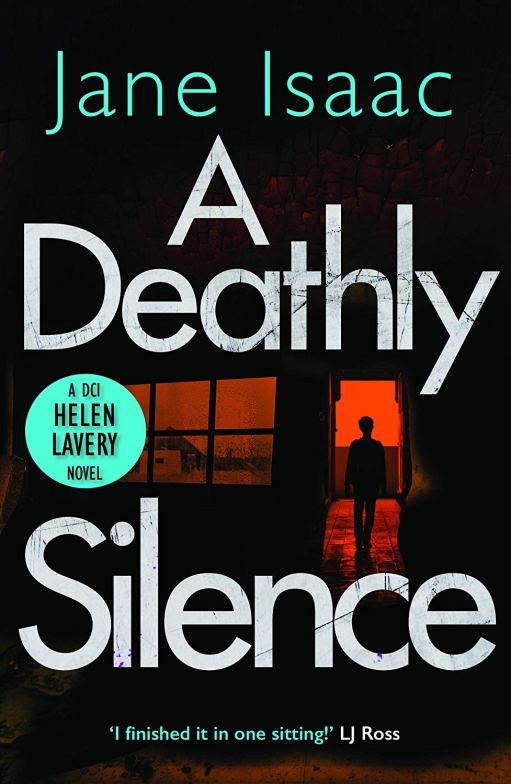
When the mutilated body of a police officer is found in a derelict factory, the Hamptonshire police force is shocked to the core.
DCI Helen Lavery returns from injury leave and is immediately plunged into an investigation like no other. Is this a random attack or is someone targeting the force? Organised crime groups or a lone killer?
As the net draws in, Helen finds the truth lies closer than she could have imagined, and trusts no one.
But Helen is facing a twisted killer who will stop at nothing to ensure their secrets remain hidden. And time is running out…
~~~
A Deathly Silence sees the return of Jane’s original protagonist, DCI Helen Lavery in this, her third outing, and what a welcome return it is!
Two children playing in an abandoned warehouse find the body of a dead woman, and it’s clear that she’s been tortured. To make matters worse, the victim was a police woman, as is her husband, now a widower. This is DCI Lavery’s first case after a short period of sick leave following injuries she herself sustained on a previous case.
I’ll say no more about the story/plot, but will briefly mention the story-telling. Which, if you’ve read any of Jane’s novels, you’d be under the expectation that it will be good. And if that’s what you’re expecting, you won’t be disappointed. Jane has a brilliant knack of writing police procedurals that are character-driven, and never get bogged down in procedure. And she always creates such realistic characters, whether it’s Will Jackman, Helen Lavery, or any of the supporting cast.
The story has plenty of twists and turns and finishes with a satisfying (if shocking) ending, which makes this a crime fiction novel you will not want to miss. Although it’s Helen Lavery’s third outing, you can easily read this as a standalone.
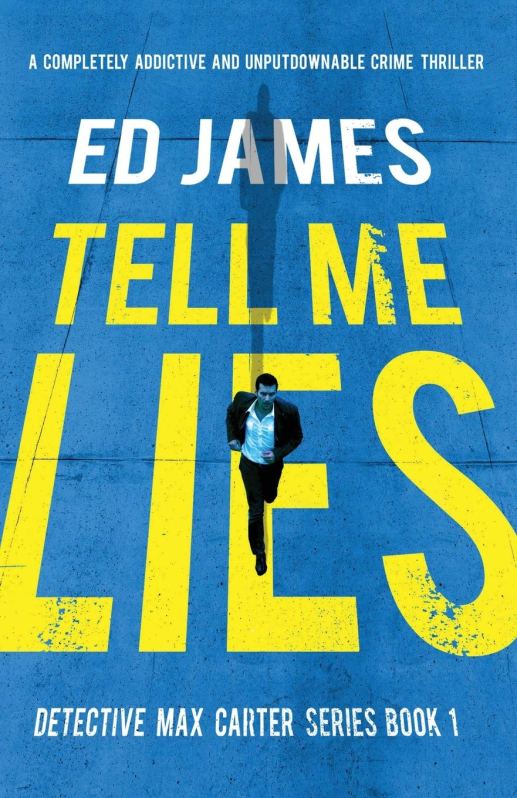
Megan Holliday opens her eyes and finds herself slumped on her doorstep. The last thing she remembers is being in the car with her two kids. She sees a handwritten note on her lap – Don’t call the police. It’s then that she realises her car is missing, and her children are gone…
Leading the FBI’s Child Abduction Rapid Deployment team, FBI agent Max Carter will stop at nothing to find children taken from their families. After all, he was once one of those taken children, so he knows exactly what’s at stake. When he hears that a young senator’s two children have been abducted and their mother left for dead, he races to the Holliday family home in Washington State.
Facing a wall of police cruisers and blacked-out SUVs, Carter quickly uncovers the facts. Megan Holliday was ambushed by a man with a gun as she returned home from taking her kids out for ice cream. Bound and drugged, the attacker left her unconscious on the doorstep with the sinister note on her lap.
As Senator Christopher Holliday walks through the halls of the US Federal Building in Seattle, his phone beeps with an alert. Frustrated by the interruption, he takes a cursory glance and is horrified by the image on the screen – his two children, Brandon and Avery, unconscious. The message he gets simply reads Meet me or they die. When Agent Carter tries to make contact with the busy senator, it seems the politician has gone missing, fleeing from the Federal Building and abandoning his distraught wife. If Carter knows one thing, it’s that Holliday has something to hide. And he just became Carter’s prime suspect.
~~~
There seems to be a recent spate of authors from this side of the pond who are writing USA based thrillers in what (to me) sounds like a very authentic American voice. Take Steve Cavanagh and Adrian McKinty – both from Northern Ireland (although McKinty resides in the US). And now we have Scottish author, Ed James with the first in a new series.
I listened to this novel on audio, and it was excellently narrated by Jared Hendrickson. I liked that the story is largely told from three different viewpoints, our protagonist, Max Carter’s, the kidnapper’s, and Senator Holliday’s. It was fast-paced, and whilst the prologue gave some clue to the kidnapper’s motivations, it really was the tiniest of clues, and the author did well to reveal things only very gradually.
The story unfolds with all the twists and turns you’d expect from a novelist as experienced as Ed James, and I was surprised by the length of time that still seemed to be remaining when the story was apparently drawing to a close. It turned out that there was still plenty more story to tell.
A confident start to a new series, and I’m looking forward to the next.
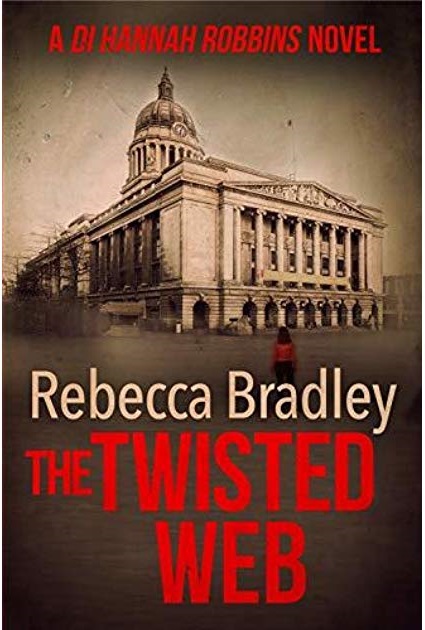
A social media shaming. A killer with a message. A deadly combination.
When the body of a man is left in the city centre set up as a realistic police crime scene, DI Hannah Robbins is forced to enter a world that can break a person, a case and a reputation.
Social media platforms light up and Hannah is pitted against the raging online monster and a killer who has already lost everything.
Can she catch the killer and put him behind bars or will she become part of his sadistic game?
The Twisted Web is book 4 in the Detective Hannah Robbins series, and can certainly be read as a standalone, although for fans of a series, you might want to start with book 1, Shallow Waters, if you want to enjoy the characters’ progression – and don’t want to find out prematurely about the odd character’s death!
The murder of a real-crime blogger followed by the very public dumping of his body drops the police into their very own social media nightmare, where viral posts can drive public opinion faster than you can say police media liaison officer.
I love Rebecca’s police procedurals – they have the authenticity that being a retired police detective can bring, but her skill at slipping police methodology into the story without it feeling laboured is excellent, and there’s always something new and interesting that I’ve never come across before!
Although we have a good idea who the perpetrator is early on – and through the use of mixed first and third-person narrative we have the jump on the police in that respect – there is still a great reveal towards the end that I didn’t see coming.
Another fab (and well-paced) book from Rebecca, which is excellently narrated by Colleen Prendergast.
My thoughts on the first three Hannah Robbins novels can be found here: Book 1, Shallow Waters; Book 2, Made to be Broken, and Book 3, Fighting Monsters.
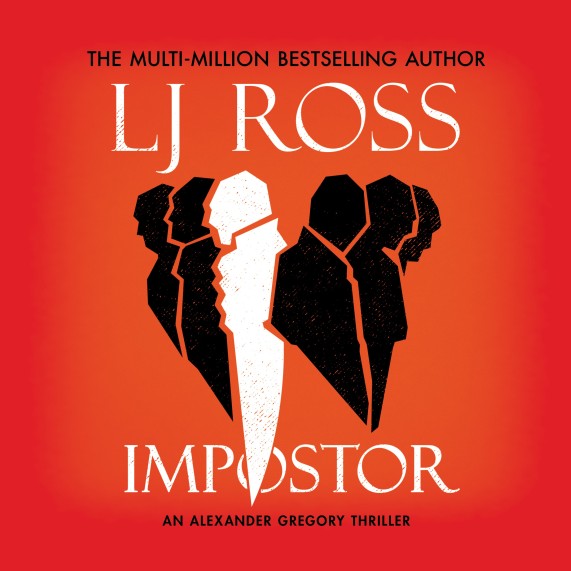
After an elite criminal profiling unit is shut down amid a storm of scandal and mismanagement, only one person emerges unscathed. Forensic psychiatrist Doctor Alexander Gregory has a reputation for being able to step inside the darkest minds to uncover whatever secrets lie hidden there, and soon enough he finds himself drawn into the murky world of murder investigation.
In the beautiful hills of County Mayo, Ireland, a killer is on the loose. Panic has a stranglehold on its rural community, and the Garda are running out of time. Gregory has sworn to follow a quiet life, but when the call comes, can he refuse to help their desperate search for justice?

L J Ross (Louise Ross) e-book literary bestseller pictured at her home in Bath, Wiltshire. Photo courtesy of Gareth Iwan Jones
LJ Ross might not be a name you recognise if all your books are bought from bookshops (although that is soon likely to change), but she has sold an astounding four million-plus copies in paperback, ebook and audio. I’ve previously reviewed one of her DCI Ryan Mysteries, Cragside, but this is the first in a new series, featuring forensic psychiatrist, Dr Alexander Gregory.
As with all of Louise’s books I’ve read, this is a real ‘page-turner’. The character of Alex Gregory is great; his calm and likeable manner helps him build trust and confidence, with the ultimate aim of understanding what makes people who do bad things tick, and I really enjoyed being taken on the journey with him.
But our protagonist is just one in a collection of characters, all of whom seem to have hidden depths and have been written to ensure they are all three-dimensional. And this one keeps you guessing – pretty much any one of them could be the killer. And the reveal at the end was brilliant.
As with many of the books I get through nowadays, I listened to the audio of this. If you weren’t aware, audio is, I believe, the fastest-growing novel medium, and with the driving I do, I’ve been a huge fan for a long time. In my experience, a poor narrator can bring down a good novel, and a good narrator can bring up a mediocre one. But when you get a combination of a great novel and a brilliant narrator, in this instance in the form of Hannibal actor, Hugh Dancy, you’re on to a real winner!

Hugh Dancy – Photo courtesy of Stephanie Diani
Impostor was published on 31 October 2019, so you can go and buy it now. Or, if you’re up for a good listen, you can get it from Audible.
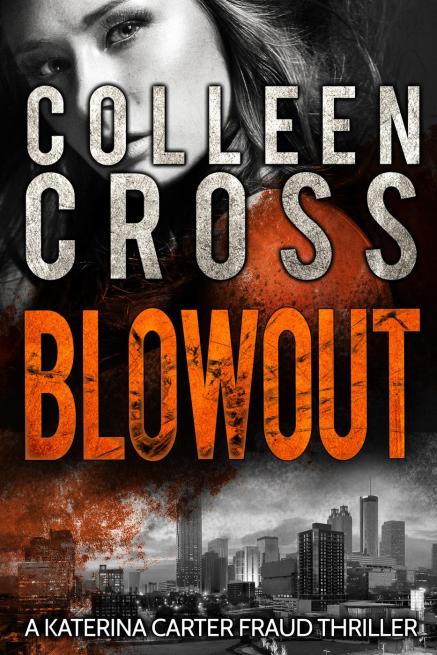
Two book reviews in one!
Blowout is book 3 in the Katerina Carter fraud thriller series. Here’s the blurb:
On private investigator Katerina Carter’s trip to a remote island aboard a luxurious yacht, she suspects the boat’s slick and charming owner is hiding a dark secret. With her cunning instinct for sniffing out malevolent cons, Kat tries to warn her friends that something is very wrong with their host and that his moneymaking scheme smells fishy. And why is she only one who thinks he’s not being completely honest?
While exploring the island, Kat and her friends research the rumors of a sinister cult, the Aquarian Foundation, and search for buried treasure. The cult swindled people out of their money and now the same situation is starting to eerily echo their present circumstances. That is if Kat can prove to the others that if something sounds too good to be true, it usually is . . .
When Kat’s warnings fall on deaf ears, she uncovers a horrifying truth that will place those closest to her in mortal danger. Now it’s a race against the clock for Kat to expose a killer before he strikes again.
I really like Colleen Cross’s Katerina Carter series. Katerina’s forensic finance expertise gets her into all manner of trouble, and in this story, even when she’s not on a case. As the blurb says, in this story, she suspects her best friend’s fiance of hiding a dark secret, and to the reader, it’s pretty clear what that secret is.
That doesn’t spoil the fun as we follow Katerina’s adventures, which are made all the better because Uncle Harry is also along for the ride this time. And what’s accountancy without danger, and there is plenty of that for Katerina in this book, who once again manages to piece the clues together just in time.
I listened to this on audio, and whilst it’s book 3, it could easily be read or listened to as a standalone. Oh, and great narration from Petrea Burchard!
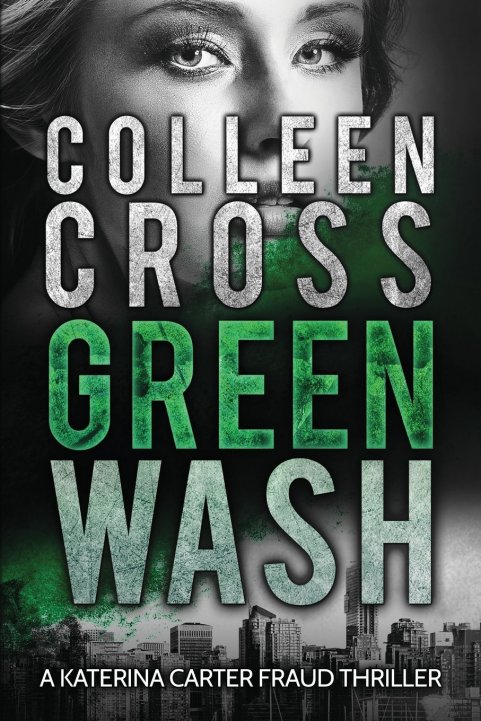
And of course, Greenwash is Katerina Carter book 4!
Private investigator Katerina Carter and boyfriend Jace Burton embark on a cozy weekend getaway just before Christmas at a luxury mountaintop lodge. While he writes the biography of a billionaire environmentalist, she explores the snowy wilderness.
Then two local environmental protesters die under mysterious circumstances. Kat and Jace race to uncover the truth only to face even deadlier disaster. The mountains take no prisoners.
Neither does the killer.
In the remote mountaintops of the Rockies, everyone looks out for each other. Except for cold-blooded killers, that is. And the killer is creeping closer and closer. Someone doesn’t want this case solved. And they’ll do anything to stop Kat from finding the truth.
I listened to book 3 and book 4 back to back. Sometimes when I do that, I get bored with the characters, but not in this case.
Katerina is getting pretty unlucky now. This is her second trip for pleasure in this series, and sadly the first trip on the yacht last time out didn’t go too well. Well, it’ll come as no surprise that her trip accompanying Jace to a luxury mountain lodge doesn’t go quite as planned either!
No uncle Harry this time, and Jace is a bit of a pain – he always seems to be so enamoured with his hosts that he doesn’t pick up on the clues that they’re usually as dodgy as can be. Kat doesn’t though, and despite Jace never really believing her suspicions, she’s not one to let a little mountainside avalanche danger get in the way of uncovering a good mystery, especially when environmental catastrophe threatens!
Another great read (or listen) from Colleen Cross!
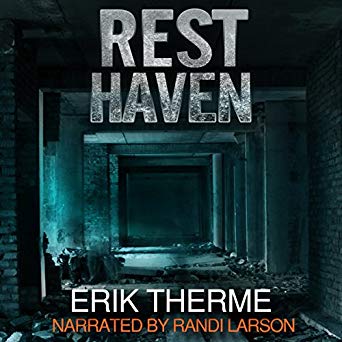
The last thing Kaylee wants to do is participate in a childish scavenger hunt – especially inside the abandoned retirement home on the edge of town. When she finds a bruised, deaf boy hiding inside one of the rooms, she vows to lead him to safety – only to discover the front doors are now padlocked, and her friends are nowhere to be found.
Kaylee is about to learn that not everything that goes “bump in the night” is imaginary, and sometimes there are worse things to fear than ghosts.
This is a YA (Young Adult) novel, written by Erik Therme. Let’s start off by saying I’m a fan of the author, and all of his novels I’ve read (or listened to via Audible) always have great characterisation, and Resthaven is no different.
Set within the spooky backdrop of a derelict nursing home, the group of teenage girls find themselves in the middle of a scavenger hunt which goes badly wrong from the start. The characters in the story don’t much like each other, and when they find they can’t all get out of the nursing home, things start to ramp up.
This isn’t a horror, but it’s on the darker side of a YA thriller. It’s well-written, with the tension and the speed of the novel gathering pace as the story unfolds. Great narration by Randi Larson makes this an all round winner for me.
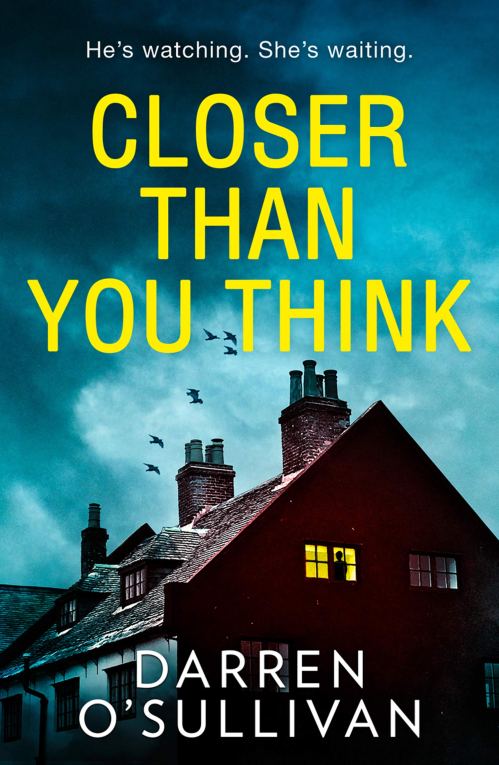
Having barely escaped the clutches of a serial killer, Claire Moore has struggled to rebuild her life. After her terrifying encounter with the man the media dubbed The Black-Out Killer, she became an overnight celebrity: a symbol of hope and survival in the face of pure evil. And then the killings stopped.
Now ten years have passed, and Claire remains traumatised by her brush with death. Though she has a loving and supportive family around her, what happened that night continues to haunt her still.
Just when things are starting to improve, there is a power cut; a house fire; another victim found killed in the same way as before.
The Black-Out Killer is back. And he’s coming for Claire…
I listened to this book via Audible, with Avena Wallace’s soft Irish lilt perfect for the part of Claire, and the author himself doing a great job of narrating the killer.
Claire’s life has been forever changed by the events of ten years earlier, which left her a widow, and terribly injured, the extent of which is slowly revealed as the story unfolds. She is slowly starting to push the boundaries of her very restrictive comfort zone when things start to take a darker turn.
Claire’s existence is based around trying to manage her fear, fear that is rooted in her terrible past, but we get to see that past catching up with her. Her claustrophobic existence is made to feel very real, as she struggles to take a shower without her mother waiting outside the bathroom. And I think seeing into the mind of the serial killer, both through the dual narrative of his thoughts, but also the letters he is writing (but not sending to Claire), really notches up the tension as the story heads for its dramatic finale.
All-in-all, a great domestic noir thriller that kept me guessing.
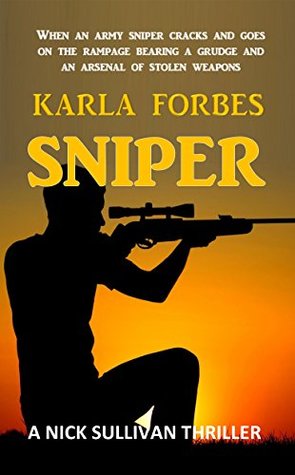
Flynn was one of the elite, a highly trained sniper in the British army who was proud of his skills and lived by a strict moral code. But even the best can crack when the stress becomes intolerable and now he’s on the rampage bearing a grudge and carrying an arsenal of stolen weapons. He believes that good soldiers are being killed because governments go to war over oil. In his twisted mind, anyone who drives a gas guzzling four by four is the enemy and deserves to die. As he carves a trail of terror and death across the country, the authorities are closing in.
But for one man, it’s become personal. Nick Sullivan is holding a grudge of his own and is hard on the heels of the sniper. But when he finally hunts down his quarry, will his thirst for revenge blind him to the fact that he’s no match for a professionally trained killer? For Flynn is the best there is. He’s a master of his craft.
This is the third in Karla Forbes Nick Sullivan thriller series. I love the concept (spoiler if you haven’t read the earlier books) of Nick falling into the profession after being an investment banker, so not being the most competent spy, but definitely the most enthusiastic (and hot-headed). And he continues to not follow orders in this very competent thriller.
This time, Nick’s pursuing a lead in his own time when an old Uni friend’s name is discovered on a list in a dead hitman’s pocket, so he’s taken Annalise on a holiday to Scotland. But that holiday becomes more dangerous and more personal than Nick could ever have bargained for.
Once again, a good story, which is very well narrated by Graig Bowles, as Nick tries to find out why his old friend, Andrew is a target, and what, if anything, links the dead hitman and the sniper who is slowly working his way north. With a hitman who decides almost on a whim who is guilty and deserving to be killed, and Nick and Annalise finding themselves in his cross-hairs, the author balances tension with humour to keep the reader interested throughout.
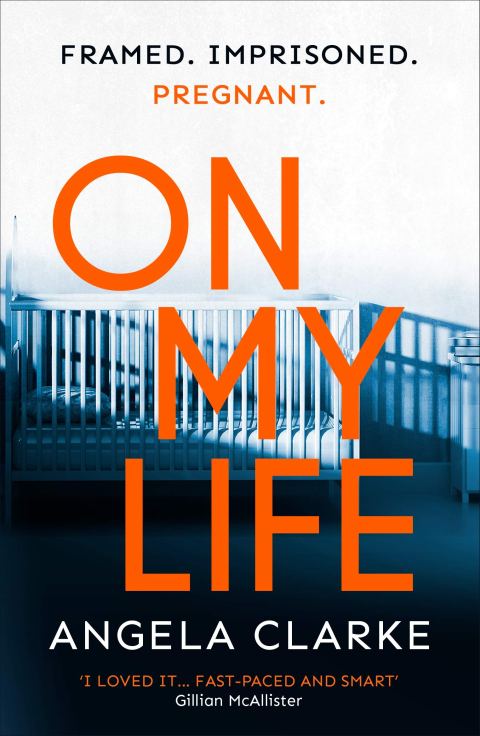
Framed. Imprisoned. Pregnant.
Jenna thought she had the perfect life: a loving fiancé, a great job, a beautiful home. Then she finds her stepdaughter murdered; her partner missing.
And the police think she did it…
Locked up to await trial, surrounded by prisoners who’d hurt her if they knew what she’s accused of, certain someone close to her has framed her, Jenna knows what she needs to do:
Clear her name
Save her baby
Find the killer
I listened to the audio version of this via Audible and it’s another great novel by Angela Clarke, with excellent narration by Sarah Durham. Actually, now I’ve typed that, I think I’m going to say it’s her best. So far. Why? Because whilst Jenna finds herself in such an unimaginable situation, as a reader, I found myself so closely drawn in that I couldn’t help become emotionally entangled.
Not only has Jenna had that perfect life snatched away from her, but she also finds herself having to deal with multiple issues; from finding her missing fiancé to identifying Emily’s killer. From hiding her media-created identity (and her pregnancy) to dealing with being targeted by the most notorious inmate in the prison.
It is well-known that the author is involved in prison visits, and for me, that experience has added a layer of authenticity to a well-crafted story. The experiences faced by pregnant women in prison are unimaginable, and the author has highlighted these within a gripping story; one that will keep you guessing. And hardly daring to believe that it could have any kind of happy ending.
Highly recommended. The book that is. Not prison.
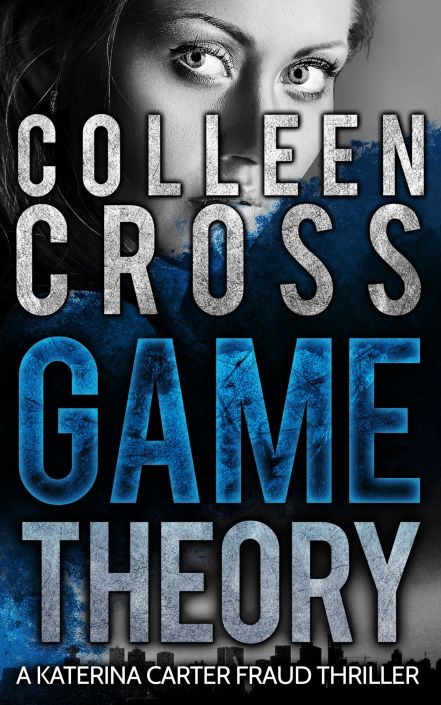
Someone is siphoning funds from billionaire Zachary Barron’s currency hedge fund. Intent on prosecuting the thief to the fullest extent of the law, he hires Katerina “Kat” Carter, the best forensic accountant in the business, to follow the money trail. Both are shocked when it leads to Zachary’s father, Nathan.
And he’s just the tip of the iceberg. Nathan belongs to a shadowy organization with global ties and unimaginable resources. They already control the banking industry and the media, but their ultimate goal – the collapse of the global currency market and a new world order – will soon be within reach.
Kat may be all that stands in their way. But for how long? The organization learns of her involvement and sends a warning. She knows it will be her last – others who have tried to foil their agenda have met with violent deaths.
If Kat walks away and keeps her mouth shut, she’ll look over her shoulder for the rest of her life in a world she’ll scarcely recognize. Ignoring the threat makes her and everyone she cares about a target… or a potential traitor.
Still, as Kat Carter knows all too well… the greater the risk, the greater the reward.
And there’s no hedging on this bet. It’s all or nothing. Who’s in?
This is the second in the Katerina Carter fraud thrillers; I’ll be reviewing numbers three and four in the not too distant future, and I reviewed Exit Strategy here.
I like the concept of a forensic accountant for a thriller – it stands a little bit apart from a legal thriller, and a forensic accountant’s life is all about following the money, to get to the bottom of fraud. This is where bean counting becomes more than just counting beans.
Game Theory is a competent thriller, and a great listen on Audible (it’s very well read by Petrea Burchard), and this story has an extra dimension of Kat trying to deal with her Uncle Harry’s deteriorating health, which adds a real personal layer to things.
It’s a great listen, but there were some niggles for me. A few aspects of the story didn’t sit right with me. I’m not convinced Zachary could be that blind to what had been going on, and there were a couple of times when Kat’s reaction, or thoughts, had me shaking my head. I mean, she’s a forensic accountant, a smart cookie by all accounts, but there is the odd time when she can’t quickly see the obvious. A bit irritating, but don’t let that put you off. It’s a good listen/read, and I am just being picky!
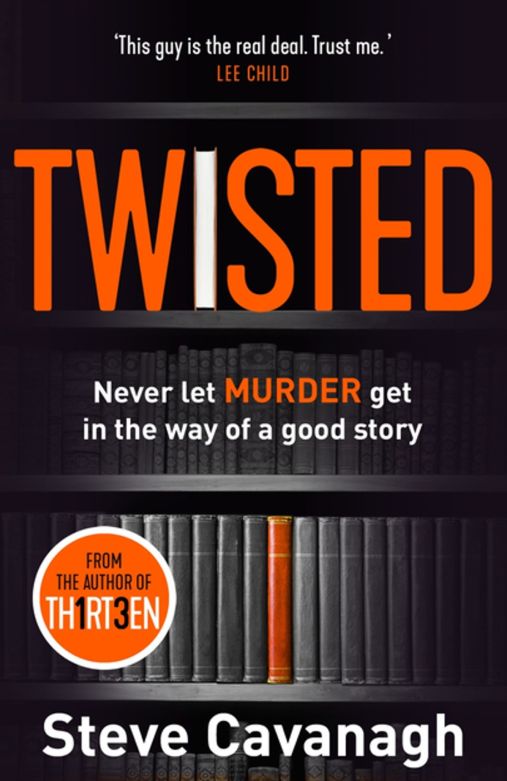
BEFORE YOU READ THIS BOOK
I WANT YOU TO KNOW THREE THINGS:
1. The police are looking to charge me with murder.
2. No one knows who I am. Or how I did it.
3. If you think you’ve found me. I’m coming for you next.
After you’ve read this book, you’ll know: the truth is far more twisted…
I am delighted to be part of Steve Cavanagh’s blog tour for Twisted, his latest novel all based around JT LeBeau, a famous, yet incredibly elusive author.
First off, I’ll start by saying I’m a huge fan of Steve’s writing, and I think his Eddie Flynn series is exceptional. Twisted is a very different story and a very different kind of novel. I read in another review somewhere that this is one of those books where the less said, the better the reader experience will be, and I think that’s a great point.
The book starts in August, with Paul Cooper waiting outside a theatre where mourners are attending a memorial service dedicated to the late JT LeBeau. But Paul isn’t a mourner; he’s got a .38 and he’s there to kill someone.
Skip back 4 months and we’re taken back to when things were relatively normal for Paul. We watch his story steadily play its way out through love, betrayal, greed and revenge (your usual crime thriller fare), and then at almost exactly the half-way point of the novel (I think my Kindle said 51%), there’s a major twist. And from then on in, everything seems to have been tossed in the air, and there’s no telling where it’s going to land!
I’m going to say no more about the story, other than it’ll keep you guessing.
I’m pleased to say I loved it!
Oh, and in case you’re wondering…


Did real-life witch Raven Kane murder one of her clients?
No one appreciates the irony of her situation more than Raven Kane: she’s a burnt-out witch … and that’s the least of her problems.
Accused of murder, this eccentric hexing-and-texting witch must explore her past lives to keep her freedom and find her way back to magic.
Not my usual read (or listen, as again this was an audiobook via Audible), but sometimes you’ve got to push the boundaries, and I’m glad I did.
I wasn’t sure when I first started listening. When you’re pretty much entrenched in a particular genre, wide as that may be, something quite different has a different effect on the reading experience. I’m also not sure how far into the book I was before I realised that I really liked the protagonist, and was keen to see how all this panned out. And things just got more and more interesting, until, towards the end, I found myself delaying having to do something as I had to listen to see how everything was resolved.
This modern witchcraft story is set in a slightly alternate reality South Africa, where witchcraft is alive and well, and people are keen to seek out the help of witches (often over the internet), but where the tensions of witch trials of old are bubbling just under the surface.
Raven Kane is accused of murder and finds herself under the watchful eye of Captain Kruger as he investigates the murder of one of her clients. But there seems to be more to Captain Kruger than meets the eye, and with herself in the frame and public attention starting to turn more hostile, Raven is facing an uphill struggle to keep her attraction to Kruger in check whilst trying to prove her innocence, neither of which is easy. Especially as she’s as guilty as the devil!
A very enjoyable listen – give it a go!


 djpaterson